
Gold prices surged Rs 2,200 to hit a fresh peak of Rs 116,200 per 10 grams in the national capital on Monday buoyed by strong global cues as investors awaited key commentary from US Fed officials for policy direction. According to the All India Sarafa Association, the precious metal of 99.9 per cent purity had closed at Rs 1,14,000 per 10 grams on Friday.

When we talk about Exchange-Traded Funds (ETFs), a few of their features that strike our mind are their low cost, easy-to-understand composition, and simple trading. While Index ETFs have always been popular among investors, Gold ETFs have garnered interest in recent years due to gold prices fluctuating near their all-time highs. But from a long-term investing context, do these ETFs really deliver?

Move over equity markets, mutual funds and bonds. Investors across India are these days picking up and trading in the latest investment avenue in town: the Gold Exchange Traded Funds.

The scheme will invest in gold exchange-traded funds of all Sebi-approved mutual funds, along with capital protection.

Gold prices on Tuesday surged Rs 723 to touch an all-time high of Rs 110,312 per 10 grams in the domestic futures market, tracking strong global cues amid growing expectations of a US Federal Reserve interest rate cut next week. Traders said weak US labour market data has strengthened the case for monetary policy easing, putting pressure on the dollar and boosting demand for the safe-haven asset.

'AUM reached an all-time high of Rs 79.9 trillion in October 2025, driven by strong retail participation and record SIP inflows of Rs 29,529 crore from over 94.5 million contributing accounts.'

New investors should enter gradually and with a long horizon. 'Staggered investment through systematic purchase plans is advisable rather than lump-sum buying.'

The new fund, which is different from gold exchange traded funds that require subscribers to have a demat account, will also offer investors the option to invest as little as Rs 100 per month, the company said in Mumbai.
Gold exchange-traded funds are back in the limelight. After a dull three-month period, a sudden slump in the US stock market last week has investors flocking to buy gold. In the past one week alone, gold prices have increased nearly 15 per cent in the international market.
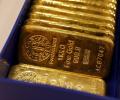
Gold prices advanced Rs 700 to reach a new lifetime high of Rs 91,950 per 10 grams in the national capital on Wednesday on the back of continued buying by jewellers ahead of wedding season, according to the All India Sarafa Association. Besides, increased tensions in the Middle East and concerns about the US economic slowdown have kept the demand for safe-haven assets intact.

Equity mutual funds attracted Rs 39,688 crore in January, driven by sharp inflow in small and midcap schemes, even as market volatilities continued. However, this was 3.5 per cent lower than the net inflow of Rs 41,156 crore registered in December.

'...a mix of asset classes.' 'Include equities for growth (across market caps), debt for stability and liquidity, gold as a hedge against macro and currency risk, and global assets for geographical and economic diversification.'
In the last five years, while gold prices appreciated 55.8% in dollar terms, in rupee terms, returns stood at 129%, primarily owing to the falling rupee.
Reliance Mutual Fund and UTI Mutual Fund have applied to Sebi to start schemes that will collect money directly from investors and buy units in Gold Exchange Traded Funds. Though at a slightly high cost, these schemes take away the hassle of maintaining demat and trading accounts with brokers. "These two factors were the biggest hindrance for gold ETFs," said Devendra Nevgi, ex-CIO, Quantum Asset Management. Nevgi started the gold ETF at the fund house.

From Rs 73k to over Rs 1.2L between January-December 2025 -- is buying gold in 2026 still sensible?

The rupee slumped 5 per cent in 2025 as persistent capital outflows from foreign investors, alongside heightened dollar demand from importers, making it one of the worst-performing Asian currencies.
For the beginners, this is a step-by-step process. First and foremost you will need to open a demat account with a depository participant before opening an account with a broker. To find out more, read on...

'When markets go into a budget with excessive optimism, the risk of disappointment is higher.'

New investors should gradually build a 5 to 10 per cent allocation to gold.

Bajaj Finance, Bharat Electronics, Tata Steel, Tata Consultancy Services, NTPC, Trent, Asian Paints and Axis Bank were the major laggards among Sensex stocks. However, Tech Mahindra, ICICI Bank, Power Grid, Hindustan Unilever and Reliance Industries were among the gainers.

Goldman Sachs expects gold to reach $3,150 per ounce in the international market by December 2025, up around 19.1 per cent from its current level of $2,645, according to a recent report in Business Standard. Domestically, gold is trading at Rs 76,018 per 10 grams after delivering a remarkable 21.9 per cent return in the past year.

'Investors' decisions should reflect their financial goals, risk tolerance, and the amount of gold already present in their portfolio.'

Witnessed net outflows of Rs 8 crore.

Inflows into gold exchange-traded funds (ETFs), which manage a total of Rs 37,390 crore, have surged sharply in recent months. This trend is likely to continue, especially after the reintroduction of long-term capital gains tax (LTCG), which is likely to attract smart money into mutual fund offerings amid a robust outlook for the yellow metal. Smart money, also known as opportunistic flows, refers to strategic investments that are generally of a short-term horizon.

'If gold's recent surge has increased its allocation beyond 15 per cent in your portfolio, now may be a good time to rebalance.'

From the Sensex firms, Tata Steel tanked the most by 4.57 per cent. ICICI Bank, Power Grid, HCL Tech, Tech Mahindra, Infosys and Kotak Mahindra Bank were also among the laggards. Mahindra & Mahindra, State Bank of India, ITC and Bharat Electronics were among the gainers.

All investors should ideally have a 10 to 15 per cent allocation to gold. Whether they invest in gold ETFs or SGBs should depend on their investment horizon.

From the 30-Sensex firms, Eternal declined by 4.02 per cent, followed by Bajaj Finance (3.88 per cent), Sun Pharma, InterGlobe Aviation, Trent, Asian Paints, Mahindra & Mahindra and Bajaj Finserv. HDFC Bank emerged as the only gainer from the pack.

Commodity investments can help you diversify your portfolio in asset classes other than equity and debt, says Dwaipayan Bose.

They help diversify portfolio and are less risky.

The Reserve Bank of India (RBI) on Wednesday came out with comprehensive draft guidelines to harmonise and regulate gold loans across all financial entities, including putting a cap of 75 per cent on loan-to-value (LTV) ratio. The draft guidelines also aim to address concerns related to certain lending practices, provide clarity on specific aspects, and strengthen the conduct-related standards in the sector.

Inflows into mutual funds' equity schemes increased by over 14 per cent on-month to Rs 41,156 crore in December, even as market volatilities continued. The small and midcap schemes of mutual funds continued to attract investor interest with inflows touching record highs during the month, despite the concerns being expressed about the two segments for the risk they portend, industry body Amfi said.

To help mobilise idle gold in households.
Now that the gold exchange traded funds (GETFs) are being sold in the market, let's look at a few things to understand them better.

Gold and silver prices are expected to maintain their upward trajectory this week, but may see late profit-booking amid the release of a series of crucial global economic indicators, analysts said. On the economic front, traders will closely monitor the manufacturing/ services PMI data from across regions and the US non-farm payrolls/ employment data along with consumer confidence for the month of September and speeches from several Federal Reserve officials, they added.

New investors should avoid short-term, tactical entries and instead go for staggered buying via ETFs to manage volatility.

Most investors should have a 5% to 10% allocation to gold for diversification. They should stagger their investments to mitigate timing risk.
 © 2026 Rediff.com - Advertise with us - Disclaimer - Privacy Policy - Sitemap - Feedback - About us - Terms of use - Grievances